In the initial design phase of large - scale ground photovoltaic power stations, the decision that engineers first encounter is not typically about the components themselves but the types of solar racking systems.
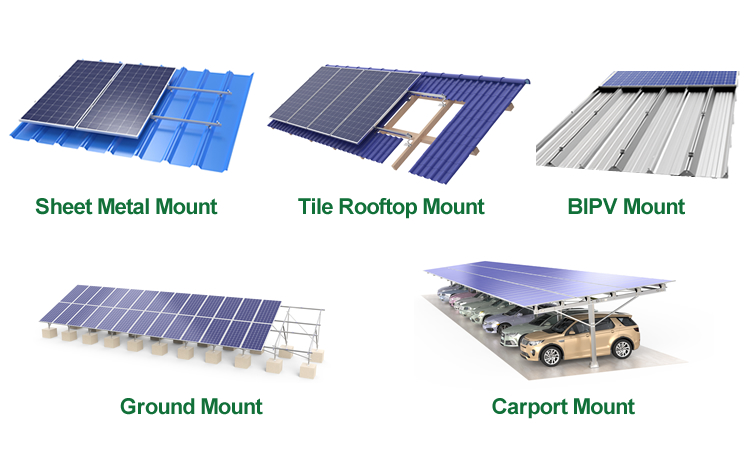
This decision directly impacts the power generation revenue and operation safety of the power station within 25 years.Essentially an installation system is not merely a steel structure per se. It is actually the practical foundation that supports the return on investment and the logic behind choosing it has to be closely linked with the characteristics of the site.
In today's market, the fixed - tilt installation system still remains the most reliable choice in large - scale flat - ground projects all over the world. The core advantage of such a solar installation system lies in its extremely low failure rate and aspects related to maintenance cost since it does not have moving components such as motors, controllers or sensors.In the areas where land cost is low, electricity price is stable and there are no complicated tracking requirements, the fixed inclined installation system that has the optimal tilt angle design can generate the most predictable internal rate of return.
When the project location is in a high - latitude area or the electricity price fluctuates with different times of the day, the horizontal single - axis tracking support shows very obvious economic advantages. This kind of solar installation system that can make the component array rotate along the east - to - west trajectory of the sun can lead to an increase of 15% to 20% in the annual power generation.However, this advantage is accompanied by an additional cost, including more complex requirements for pile driving precision, stricter regulations for operation and maintenance, and self - protection procedures that can withstand extreme wind speeds.
For the hilly areas that have broken terrain and steep east - west slopes, the inclined single - axis tracking support, which is a relatively more practical scheme, is a solar installation system that can make the components maintain a fixed inclined angle in the north - south direction and can also rotate in the east - west direction.Although their power generation gain is a bit lower than that of the dual-axis tracker, when dealing with irregular plots, they offer a more balanced trade-off between adaptability and cost, which makes them especially suitable for tea gardens or forest conversion projects in central and southern China that are not fit for large-scale land leveling.
In the scenarios of agricultural photovoltaic and aquaculture photovoltaic, the large-span flexible installation system that is gradually recognized. This kind of solar installation system, which uses prestressed steel cables to replace the traditional rigid beam-column structure, thus leaves enough space below for agricultural planting or fishing and so on.The difficulties existing in the design are in the wind-induced vibration and the unevenly distributed snow load; therefore, the cable spacing and the anchoring scheme should be determined according to the strict wind tunnel test data.Otherwise, the long-term creep effect will greatly enhance the risk of hidden cracks in the components.
For floating projects on water the floating installation system is indeed the only feasible option such systems mainly rely on high - density polyethylene (HDPE) floating bodies as carriers and there is also an anchoring system to resist the horizontal pulling force caused by water level fluctuations.Unlike the systems installed on the ground the floating systems have to additionally take into account the fatigue damage caused by wave frequencies to the connectors and must adopt electrical connection schemes with higher protection levels to deal with the insulation problems brought about by the persistent high - humidity environment.
In distributed scenarios like factory roofs, because of its simple installation, the non - penetrating ballast installation system is widely utilized. These solar installation systems depend entirely on the self - weight of concrete foundation blocks or metal ballast boxes to resist wind loads without damaging the waterproof layer of the existing roof.What they designed focuses on precisely calculating the ballast distribution and the live load margin of the roof - a balance that has to be achieved between the need to prevent overturning and not exceeding the structural load - bearing capacity.There are clear requirements put forward regarding the inspection and assessment of the existing buildings at that time.
For newly - built large - scale public buildings or logistics centers and the like, the structural integrated installation system is emerging as an advanced approach. In these systems, the solar panels are directly made into a part of the building's exterior wall, replacing the traditional color - coated steel roofs or glass curtain walls and so on.Although the initial investment is much greater than traditional solutions, the savings in roof material costs and the additional aesthetic value of the building make this type have unique competitive advantages in the economic evaluation throughout the life cycle.
It is worthy of noting that any successful application of any solar energy installation system has to depend on detailed geological surveys as well as meteorological data. The soil resistivity will decide the design of the grounding system, and the basic wind speed and icing thickness directly have an impact on the safety factor of the structure.These parameters will be transformed into specific steel grades, galvanized coating thicknesses and bolt torque values by experienced system installation engineers rather than simply depending on general design manuals.
Generally speaking the selection of solar installation system types should not be based on experience or personal preferences but rather on a multi - factor optimization decision - making process each type from the stability of the fixed bracket to the adjustability of the intelligent tracker has its own appropriate operating conditions.For industry experts, the real worth does not reside in ascertaining which kind is "superior", but in accurately identifying within the limitations of specific projects the solar installation system which can make the most of the social and economic benefits per unit of investment.


